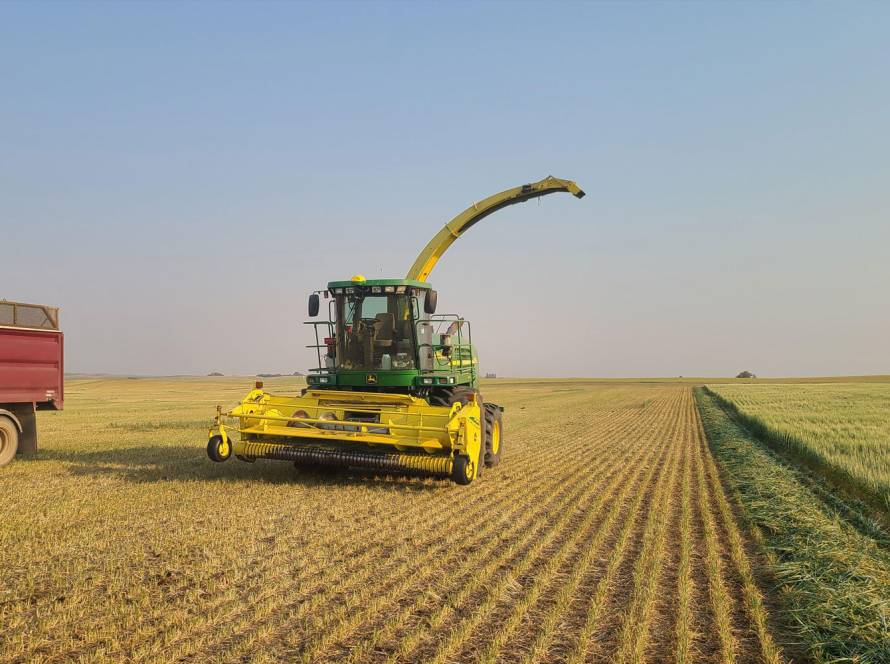
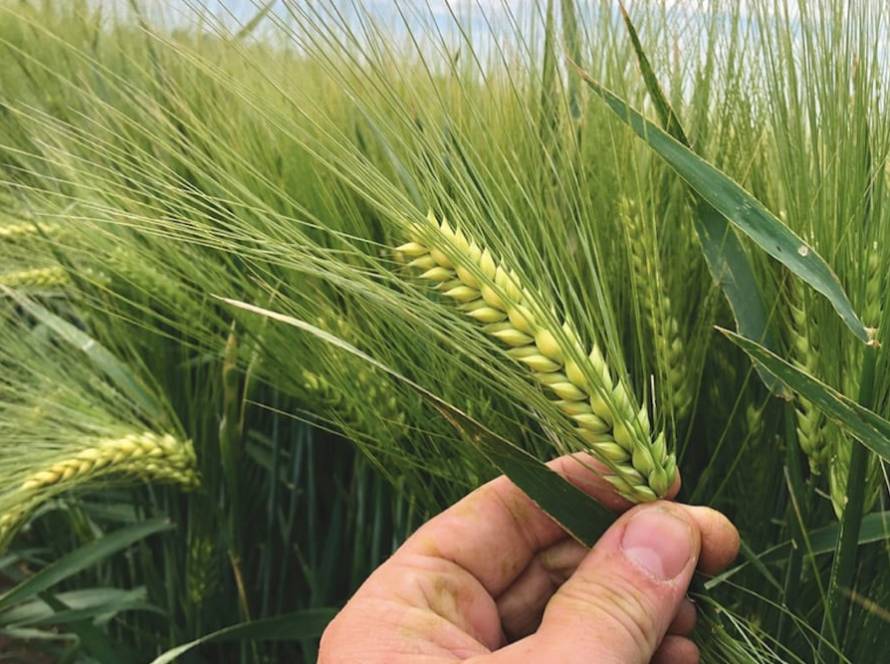
Oats are widely regarded as the safest common grain for horse feeding programmes, largely because of their relatively high fiber content compared with other feed grains. For a horse feed distributor or feed mill sourcing Canadian oats, that safety reputation only holds if the oats arriving at your facility are properly graded, properly cleaned and suited to how you intend to feed them, whole or processed. This guide works through what quality and cleaning actually mean for Canadian oats, and what to specify when you place an order.
Why oats suit horse feeding programmes
According to a Cooperative Extension horse feeds resource from the University of Kentucky, oats are the most popular and commonly cited as the safest grain fed to horses, largely due to a fiber content of about 13 percent. That fiber adds bulk, meaning a horse has to eat a larger volume of oats to get the same energy as a smaller volume of a denser grain such as corn or barley. The same source notes this bulk effect makes overeating, and the colic or founder risk that comes with it, somewhat easier to avoid with oats than with a dense grain, though any grain can still be overfed.
This is general equine nutrition guidance, not a Western Forage specific feeding recommendation. A buyer’s own nutritionist or feeding programme should set exact feeding rates for any individual operation.
How Canadian oats are graded for quality
Canadian oats are graded under the Canadian Grain Commission’s official system, which sorts oats into numbered grades such as Number 1, Number 2 and Number 3 Canada Western, through to lower feed and sample grades. Grading factors include test weight, which measures how much a known volume of oats weighs and reflects kernel density and soundness, along with total damage, foreign material, heated kernels, sprouted or mildewed kernels and several other factors the Commission defines in detail.
As an example of how the thresholds tighten by grade, the Commission sets stone tolerances of 0.02 percent for Number 1 Canada Western oats, 0.07 percent for Number 2, and 0.15 percent for Number 3. The same pattern, a tighter tolerance at the higher grade and a looser one further down, applies across most of the grading factors, not just stones.
A grade name on its own tells a buyer where a lot sits in this system, but the certificate for the specific lot is what shows the actual figures behind that grade, the same principle this site applies to Timothy hay grading. See how we apply this to Timothy hay grading →
What cleaning actually removes
The Canadian Grain Commission defines dockage, under the Canada Grain Act, as any material mixed into a parcel of grain other than the grain itself, material that must be and can be separated before a grade is assigned. For oats, dockage is removed using a Carter dockage tester under a defined procedure, and the material removed is reported to the nearest 0.1 percent of the sample’s gross weight.
What gets removed includes material separated by sieving and aspiration, lightweight chaff and fine material lifted out by air, and in some cases soft earth pellets, capped at 10 percent of the gross sample weight before they push a sample into a lower category. A further step, cleaning for grade improvement, can remove large seeds such as peas, beans or other cereal grains, capped at 5 percent of the oats removed, and can address issues like covered smut, where levels under 2 percent are simply added to dockage and higher levels require review.
For a feed buyer, this matters beyond the grade certificate itself. Oats that have not been cleaned properly can carry excess dust, chaff and foreign material into a feed mill or storage bin, which affects both handling and the consistency of what actually reaches the animal. A clean sample is also easier to judge by eye, which leads into the next section. See our Canadian oat cleaning grades →
Kernel quality checks a buyer can do
The same Cooperative Extension source gives several practical checks that do not require a lab. Good quality oats should look plump and feel heavy for their size, with a bright color and a low proportion of husk to kernel, since heavier kernels carry more nutrient per unit of weight. Dust is flagged as a sign of age or lower quality. A musty smell points to excess moisture and possible spoilage, and a sour or bitter taste is described as a warning sign rather than something to feed through.
The source also illustrates the weight point using United States grade standards, where Number 1 oats weigh around 36 pounds per bushel and Number 4 oats around 27 pounds, noting these are US figures rather than Canadian ones. The underlying point still applies to Canadian sourcing: a heavier, cleaner sample generally reflects a better feed value than a light, dusty one, even before any lab figures are reviewed.
Whole, rolled or crimped: processing for feed applications
Oats can be fed whole or processed, most commonly rolled or crimped. According to the same Extension source, whole oats are easily eaten and digested by horses as they are, since the hull is relatively thin compared with other feed grains. Where processing is used, the source notes that only a slight crimp is needed, enough to break the kernel coat so the animal chews it less and digestive juices reach the kernel more easily, rather than a heavy crush.
Which format suits a given buyer depends on the feed application. A feed mill blending a complete ration may prefer a processed format that mixes consistently with other ingredients. A distributor supplying whole oats to equestrian operations that feed grain alongside hay may prefer the whole kernel, since processing adds a cost and whole oats are already readily digested. Neither format is inherently better; the right choice follows the buyer’s own blending and handling setup.
What to specify when sourcing Canadian oats for horse feed
| Specify this | Why it matters |
|---|---|
| Grade (Number 1, 2, 3 Canada Western, or feed grade) | Sets the baseline for test weight, damage and foreign material tolerances |
| Test weight for the specific lot | Reflects kernel density and soundness beyond the grade name alone |
| Cleaning level or dockage percentage | Affects dust, handling and consistency at your facility |
| Whole or processed format, and degree of crimp if processed | Should match your own blending, storage and feeding setup, not a default export configuration |
| Packaging and bulk or bag format | Sized to your handling equipment and storage |
| Initial order size and expected ongoing volume | Lets a supplier plan supply consistency if this becomes a recurring programme |
| Destination, port and documentation needs | Import requirements vary by country and should be confirmed for your specific destination |
See our guide to Timothy hay buyer specifications for the same approach applied to hay enquiries →
Browse our Canadian oats → Request a Canadian oats export quote →
Frequently asked
Are Canadian oats safe for horses compared with other grains?
Oats are generally considered the safest common grain for horses because of their fiber content, which adds bulk and makes overeating somewhat harder than with a denser grain such as corn. This is general feeding guidance; always confirm a feeding programme with a qualified nutritionist.
What does a Canadian oat grade actually tell a buyer?
It places the lot within the Canadian Grain Commission’s grading system for factors such as test weight, damage and foreign material, with tighter tolerances at higher grades. Request the certificate of analysis for the specific lot rather than relying on the grade name alone.
Should I buy whole oats or a processed format for horse feed?
Either can work well. Whole oats are readily digested as they are. A processed format such as a light crimp suits buyers blending a complete ration or wanting a consistent mix. The right choice depends on your own feed application and handling setup.
How can I judge oat quality without a lab report?
Look for plump, heavy kernels with a bright color, a clean smell and minimal dust. A musty smell or a sour or bitter taste are signs of moisture damage or spoilage and are reasons to reject a sample.
Can I request a specific cleaning level for my oats?
Yes. Dockage and cleanliness can be discussed as part of your specification, alongside grade, test weight and processing format. State what matters for your facility rather than assuming a default export configuration will suit your handling.
Request a Canadian oats export quote
Tell us the grade, format and volume you need, and our export team will confirm what is currently available. You can also browse our Canadian oats page for our current cleaning grades and packaging options.