Premium Timothy Hay Supplier & Exporter
Premium North American Timothy Hay for Global Markets
Western Forage supplies and exports high-quality Timothy Hay (Phleum pratense) from North America to international feed distributors, importers, equestrian operations, dairy farms, livestock businesses, and commercial feed companies.
Our Timothy hay is sourced from carefully selected growing regions in the United States and Canada, where cool growing conditions, fertile agricultural land, and experienced forage producers help produce the characteristics international buyers look for: good green color, long stems, desirable leaf-to-stem balance, consistent texture, and dependable nutritional quality.
From sourcing and grading to compression, container loading, inspection, and export documentation, Western Forage provides an integrated solution for customers purchasing Timothy hay in bulk for export.
We understand that every market has different requirements. Our team works with customers to select the appropriate Timothy hay grade, bale format, specifications, packaging, and shipping program for their market.
Looking for a reliable Timothy hay supplier? Contact Western Forage for current crop availability, specifications, photos, loading options, and export pricing.
What Is Timothy Hay?
Timothy hay is a cool-season perennial grass widely used as forage for horses, cattle, dairy animals, rabbits, and other livestock.
Known scientifically as Phleum pratense, Timothy grass is valued for its palatability, fiber content, relatively low protein compared with many legumes, and suitability for a wide range of feeding programs.
High-quality Timothy hay is especially popular in the international equine market because of its combination of nutritional value, aroma, texture, and fiber.
Unlike Alfalfa, which is a legume and generally contains higher levels of protein and calcium, Timothy is a grass hay. This makes Timothy an important component of feeding programs where buyers are looking for quality roughage without the higher protein and energy levels associated with premium Alfalfa.
Why Choose Western Forage Timothy Hay?
Western Forage focuses on supplying export customers with consistent forage backed by professional logistics and quality control.
North American Origin
Our Timothy hay is sourced from established forage-growing regions in the United States and Canada. These regions are internationally recognized for producing quality cool-season grass hay.
Export-Focused Quality Control
Export hay requires more than simply producing a good crop. Hay must also withstand compression, handling, containerization, ocean transportation, and unloading at destination.
Our team pays close attention to:
Color
Moisture
Stem quality
Leaf retention
Maturity
Foreign material
Dust
Mold
Bale consistency
Compression quality
Packaging integrity
Multiple Timothy Hay Grades
Not every customer requires the same grade of Timothy hay. Western Forage can supply different grades depending on crop conditions, availability, intended use, and customer requirements.
Our primary grades include:
Supreme Timothy Hay
Our higher-end Timothy offering, selected for customers seeking excellent green color, desirable texture, good leaf retention, and premium visual characteristics.
Premium Timothy Hay
High-quality export Timothy suitable for equestrian customers, feed distributors, retailers, and commercial forage buyers looking for a strong balance between quality and value.
Dairy Premium Timothy Hay
A commercially competitive Timothy grade suitable for customers requiring dependable grass forage while prioritizing nutritional and economic value.
Because Timothy hay is an agricultural product, exact characteristics can vary between fields, cuttings, crop years, and growing regions. Current photos, specifications, laboratory analysis, and availability can be provided for specific lots when available.
- Double-Compressed Small Bale
- Double-Compressed Large Bale
- Single-Press Bale
- Wrapped for Ocean Freight
- Custom Packaging
Timothy Hay Specifications
Typical specifications depend on the grade, cutting, origin, and individual lot.
| Specification | Typical Requirement |
|---|---|
| Product | Timothy Hay |
| Scientific Name | Phleum pratense |
| Origin | United States / Canada |
| Moisture | Typically below 12% for selected export programs |
| Color | Green to natural green depending on grade |
| Form | Double-compressed hay |
| Bale Options | Full-cut / Half-cut / other formats subject to availability |
| Container | 40-foot High Cube |
| Loading | Approximately 23–26 metric tons depending on bale configuration |
| Packaging | Export compressed bales |
| Intended Use | Equine / livestock / commercial animal feed |
| Shipping | Containerized ocean freight |
| Documentation | Subject to origin and destination requirements |
Important: Specifications shown above are general guidelines and are not a guaranteed analysis for every shipment. Agricultural products naturally vary. Buyers should request the specifications and analysis for the particular lot being offered.
Supreme Timothy Hay
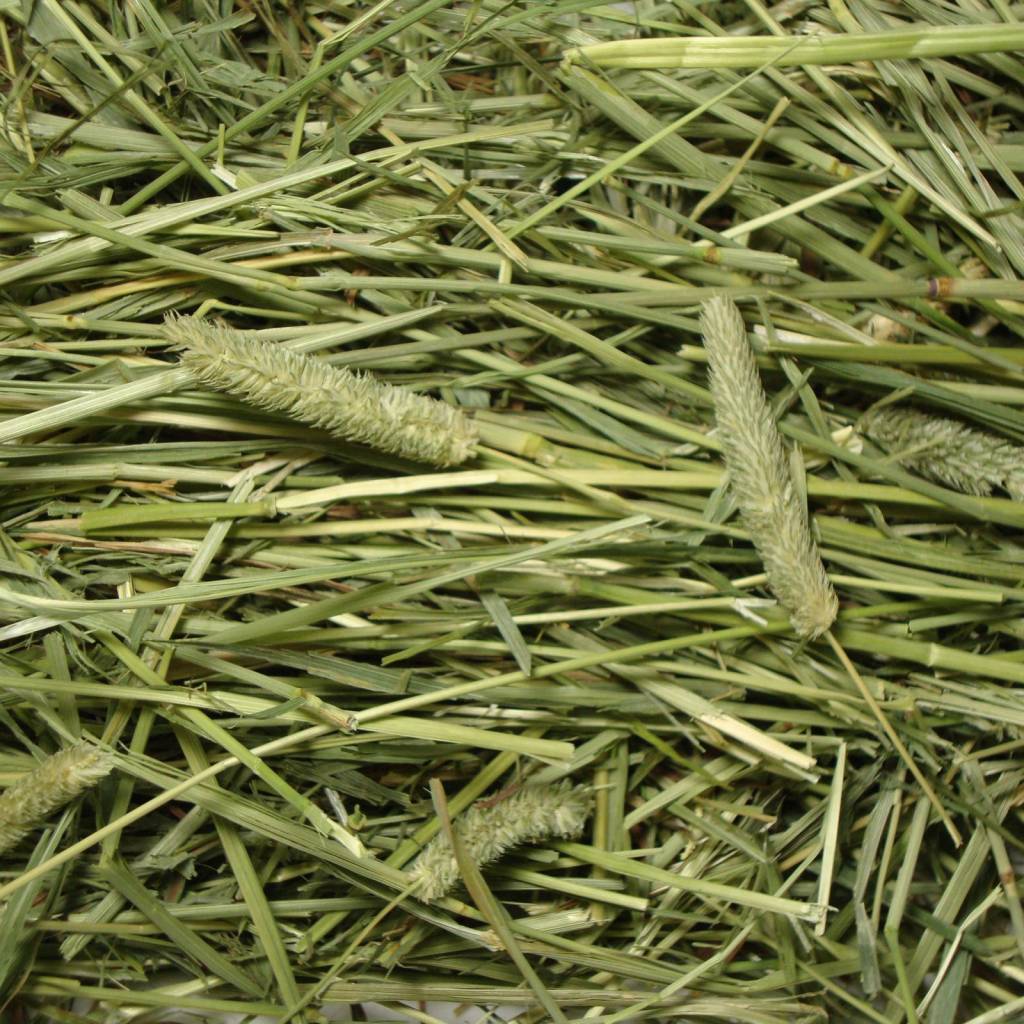
Supreme Timothy is selected for buyers who place significant importance on appearance, color, texture, and overall forage quality.
Depending on crop conditions and availability, Supreme Timothy may feature:
Excellent green color
Long stems
Good leaf retention
Soft to medium texture
Clean appearance
Low visible foreign material
Consistent bale presentation
Good aroma and palatability
Supreme Timothy is particularly suited to premium equestrian markets, specialty feed distributors, and customers whose end users expect high-quality North American forage.
Availability of Supreme grade can be limited because weather conditions have a significant impact on color and quality during harvest.
Premium Timothy Hay
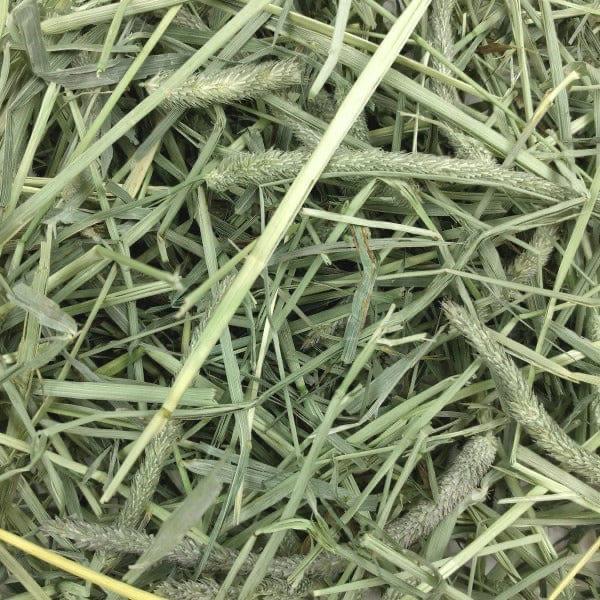
Premium Timothy is one of our most versatile export products.
It is selected to provide a strong combination of appearance, nutritional value, consistency, and commercial pricing.
Premium Timothy can be suitable for:
Horse farms
Riding clubs
Equestrian centers
Feed distributors
Feed stores
Animal nutrition businesses
Commercial livestock operations
Importers and wholesalers
For many international customers, Premium Timothy offers an attractive balance between premium visual characteristics and competitive landed cost.
Timothy Hay for Horses
Timothy hay is one of the most recognized grass hays used in equine nutrition.
Horses naturally require forage as a major component of their diet, and good-quality Timothy hay can provide the long-stem fiber required to support normal digestive function.
Timothy hay is commonly selected by horse owners because of its:
Fiber content
Palatability
Grass-hay nutritional profile
Consistent feeding characteristics
Relatively moderate protein compared with many legumes
Suitability for many maintenance feeding programs
The nutritional requirements of individual horses vary depending on age, activity level, body condition, health, and overall diet. Buyers and end users should work with a qualified veterinarian or equine nutrition professional when establishing feeding programs.
First-Cut vs. Second-Cut Timothy Hay
The characteristics of Timothy hay can change depending on when the crop is harvested.
First-Cut Timothy Hay
First-cut Timothy generally has:
Longer stems
More developed seed heads
Coarser texture
Higher structural fiber
Strong yield
Traditional Timothy appearance
First cutting can be attractive for customers looking for long-stem grass hay and dependable fiber.
Second-Cut Timothy Hay
Second-cut Timothy may have:
-
Softer texture
-
Finer stems
-
Increased leaf content
-
Fewer or smaller seed heads
-
Higher palatability
-
Different nutritional characteristics
Second-cut Timothy is often sought after by premium equestrian customers, although quality depends heavily on growing and harvest conditions.
Western Forage can help buyers determine which cutting and grade best matches their target market.
Timothy Hay vs. Alfalfa Hay
Timothy and Alfalfa are both widely used forage products, but they have different nutritional characteristics.
| Timothy Hay | Alfalfa Hay |
|---|---|
| Grass hay | Legume hay |
| Generally moderate protein | Generally higher protein |
| Generally lower calcium | Higher calcium |
| Excellent source of structural fiber | Nutrient-dense forage |
| Popular for horses | Popular for dairy and performance feeding |
| Long-stem roughage | Leafier forage |
| Often less rich than Alfalfa | Higher nutritional density |
Neither forage is universally “better.” The correct choice depends on the animal, feeding program, nutritional requirements, availability, and cost.
Western Forage supplies both Timothy hay and Alfalfa hay, allowing international buyers to build forage programs around their specific market requirements.
Double-Compressed Timothy Hay for Export
International forage transportation requires efficient container utilization.
Western Forage supplies double-compressed Timothy hay designed for containerized export.
Compression reduces bale volume while allowing more product to be loaded into a standard ocean container. This can significantly improve freight efficiency compared with shipping traditional uncompressed field bales.
Depending on the product and customer requirements, bale formats may include:
Full-Cut Double-Compressed Bales
Full-cut bales preserve longer forage length while reducing overall bale volume for export transportation.
Half-Cut Double-Compressed Bales
Half-cut bales provide a smaller and more manageable bale format. They are particularly useful for distributors, feed stores, equestrian facilities, and customers who prefer easier handling.
Large / Mega Bale Programs
Larger bale formats may also be available for commercial livestock customers or specialized feeding operations.
Contact Western Forage to discuss current bale sizes, weights, packaging configurations, and container loading options.
Container Loading
Our Timothy hay is typically exported in 40-foot High Cube containers to maximize payload and shipping efficiency.
A typical export container may carry approximately 23–26 metric tons, depending on:
Bale dimensions
Bale density
Product moisture
Pallet configuration
Customer packaging requirements
Container payload restrictions
Destination regulations
Actual net weight is confirmed during the loading and documentation process.
Timothy Hay Quality Control
Consistency is critical when purchasing forage internationally.
Western Forage works with growers, processors, warehouses, inspection agencies, freight forwarders, and shipping lines to help maintain product quality throughout the export process.
Our quality-control process may include evaluation of:
Color
Good green color is an important visual indicator for many premium forage markets.
Moisture
Moisture management is particularly important for export hay because containers may spend several weeks in transit.
Mold
Hay is inspected for visible mold and unacceptable deterioration before loading.
Foreign Material
Product is evaluated for undesirable foreign material and contamination.
Bale Integrity
Compressed bales are checked for appropriate compression and packaging integrity.
Lot Consistency
Where possible, product is selected and grouped to maintain reasonable consistency throughout each shipment.
Loading Condition
Container loading procedures can include visual checks and shipment photography for quality-control records.
Laboratory Analysis
Laboratory analysis can be arranged or provided where applicable.
Depending on the product, buyer, and destination requirements, analysis may include parameters such as:
Moisture
Crude protein
Acid Detergent Fiber (ADF)
Neutral Detergent Fiber (NDF)
Relative Feed Value (RFV)
Minerals
Other nutritional parameters
Because forage is a natural agricultural commodity, nutritional values vary by field, harvest date, cutting, maturity, weather, and storage conditions.
Buyers requiring specific nutritional parameters should communicate those requirements before confirming an order.
Export Documentation
International hay shipments may require different documents depending on the country of origin, destination, product, and import permit conditions.
Western Forage works with relevant parties to coordinate export documentation where applicable.
Documentation may include:
Commercial Invoice
Packing List
Bill of Lading
Certificate of Origin
Phytosanitary Certificate, where applicable and subject to regulatory approval
Inspection documentation
Laboratory analysis or Certificate of Analysis, where applicable
Fumigation documentation, when required and available
Additional destination-specific documentation
Import requirements vary by country and can change. Buyers should confirm current import requirements with their local agricultural or customs authority before shipment.
Our export team can work with the buyer, freight forwarder, inspection authorities, and other relevant parties to help coordinate the required documentation.
Timothy Hay Export Markets
Western Forage serves and develops relationships with forage importers and distributors across international markets.
Our target and established export markets include:
Timothy Hay Export to Japan
Japan is one of the world’s most established markets for imported forage. North American Timothy hay is widely recognized within Japanese equestrian, dairy, livestock, and feed distribution channels.
Western Forage welcomes inquiries from Japanese hay importers, feed distributors, wholesalers, equestrian suppliers, and livestock operations.
Timothy Hay Export to South Korea
South Korea has an established market for imported forage, including Timothy hay for livestock and equestrian applications.
We can discuss containerized Timothy programs and current shipping options to major South Korean ports.
Timothy Hay Export to UAE
The United Arab Emirates is an important regional market for imported forage because of its substantial equestrian sector and dependence on imported animal feed.
Western Forage supplies and develops forage programs for buyers in Dubai, Abu Dhabi, and surrounding markets.
Timothy Hay Export to Vietnam
Vietnam represents a growing market for imported animal feed and quality forage.
We welcome inquiries from Vietnamese importers, feed distributors, dairy operations, and commercial agricultural businesses.
Timothy Hay Export to Malaysia
Western Forage works with international buyers requiring containerized forage shipments and can coordinate documentation based on Malaysian import requirements.
Timothy Hay Export to India
India represents an emerging opportunity for specialized imported forage, particularly within premium equestrian, breeding, dairy, and animal nutrition segments.
Import requirements should always be confirmed before shipment because phytosanitary and quarantine requirements may apply.
Timothy Hay Export to the Middle East
Western Forage welcomes inquiries from customers throughout the GCC and Middle East, including:
United Arab Emirates
Qatar
Kuwait
Saudi Arabia
Oman
Bahrain
Our team can evaluate shipping options and provide quotations based on the buyer’s preferred destination port.
FOB and CIF Timothy Hay Pricing
Western Forage can quote Timothy hay under different commercial terms depending on the transaction.
FOB Pricing
FOB pricing can be provided for customers who prefer to arrange their own international ocean freight.
For U.S.-origin Timothy hay, export programs may be available through Pacific Northwest gateways depending on product location and shipping arrangements.
CIF Pricing
For customers who prefer a delivered ocean-freight quotation, Western Forage can provide CIF pricing to selected international ports, subject to shipping-line availability and current freight rates.
CIF quotations can include:
Product
Export preparation
Ocean freight
Marine insurance where applicable under the agreed Incoterm
Customers should provide the following information when requesting a quotation:
Destination country
Destination port
Timothy grade required
Preferred bale format
Number of containers
Expected monthly requirement
Required specifications
Import permit or phytosanitary requirements, if available
Ocean freight rates change frequently, so export quotations are generally provided with a defined validity period.
Bulk & Container Timothy Hay Orders
Western Forage primarily works with commercial buyers purchasing Timothy hay by container.
We welcome inquiries from:
Hay importers
Forage distributors
Feed wholesalers
Feed manufacturers
Equestrian distributors
Horse farms
Dairy operations
Livestock businesses
Agricultural cooperatives
Feed retailers
International trading companies
We are particularly interested in developing long-term supply relationships with buyers requiring recurring monthly shipments.
Trial container programs may be available for qualified customers who want to evaluate our product before establishing a regular supply schedule.
Why Source Timothy Hay From North America?
North America is one of the world’s leading regions for commercial forage production.
Certain areas of the United States and Canada offer excellent conditions for producing Timothy hay because of:
Cool growing temperatures
Long summer daylight hours
Productive agricultural soils
Established hay farming expertise
Modern harvesting equipment
Commercial compression infrastructure
Access to international ports
Established forage export supply chains
These factors have helped North American Timothy hay establish a strong reputation among international feed and equestrian customers.
From Field to Container
Western Forage’s goal is to provide more than a commodity. We aim to build dependable forage supply programs.
Our export process generally follows these stages:
1. Sourcing & Production
Timothy hay is sourced from selected North American growing regions.
2. Quality Evaluation
Available lots are evaluated according to grade, color, moisture, texture, maturity, and overall condition.
3. Customer Selection
Photos, specifications, analysis, and pricing can be provided so the customer can select the appropriate product.
4. Compression & Packaging
Hay is compressed into export-efficient bale formats.
5. Export Preparation
Documentation and inspection requirements are coordinated based on the destination.
6. Container Loading
Product is loaded into export containers according to the agreed configuration.
7. Shipping
Containers are transported to port and shipped to the customer’s destination.
8. Documentation
Final commercial and export documents are provided according to the agreed transaction requirements.
This integrated approach gives buyers greater visibility from product selection through international shipment.
Frequently Asked Questions About Timothy Hay
Where does Western Forage Timothy hay come from?
Our Timothy hay is sourced from selected growing regions in the United States and Canada. Exact origin depends on crop availability, grade, customer requirements, and season.
Do you export Timothy hay internationally?
Yes. Western Forage focuses on containerized forage exports and works with international importers, distributors, equestrian businesses, and livestock customers.
What size container do you use?
Timothy hay is typically shipped in 40-foot High Cube ocean containers.
How much Timothy hay fits in a 40-foot container?
Approximately 23–26 metric tons may be loaded depending on bale size, density, moisture, pallet configuration, container payload limitations, and customer requirements.
Is your Timothy hay double compressed?
Yes, double-compressed Timothy hay is available for international export.
Do you offer half-cut Timothy hay?
Yes, half-cut and full-cut options may be available depending on the product lot and processing program.
What is the moisture level?
Selected export Timothy programs typically target moisture levels appropriate for international shipment. Lot-specific specifications should be confirmed before purchase.
Can you provide laboratory analysis?
Laboratory analysis may be available for specific lots or arranged depending on customer requirements.
Can you provide a phytosanitary certificate?
Phytosanitary certification depends on the country of origin, destination-country requirements, inspection results, and approval by the relevant plant-health authority. Western Forage can coordinate the process where applicable, but certification cannot be guaranteed before the required inspection and regulatory approval.
Can I purchase one trial container?
Trial container orders may be considered depending on destination, product availability, logistics, and customer requirements.
Do you offer regular monthly supply?
Yes. We are particularly interested in working with importers and distributors seeking consistent monthly container programs.
Can you quote CIF pricing?
Yes. Provide your destination port, required grade, quantity, and bale format, and our team can evaluate current ocean freight and prepare a quotation.
What is the minimum order?
Our international business primarily focuses on commercial container quantities. Contact our export team with your requirements for current minimum-order information.
Request a Timothy Hay Quote
Whether you require a single trial container or a regular monthly Timothy hay supply program, Western Forage can help you evaluate the right product for your market.