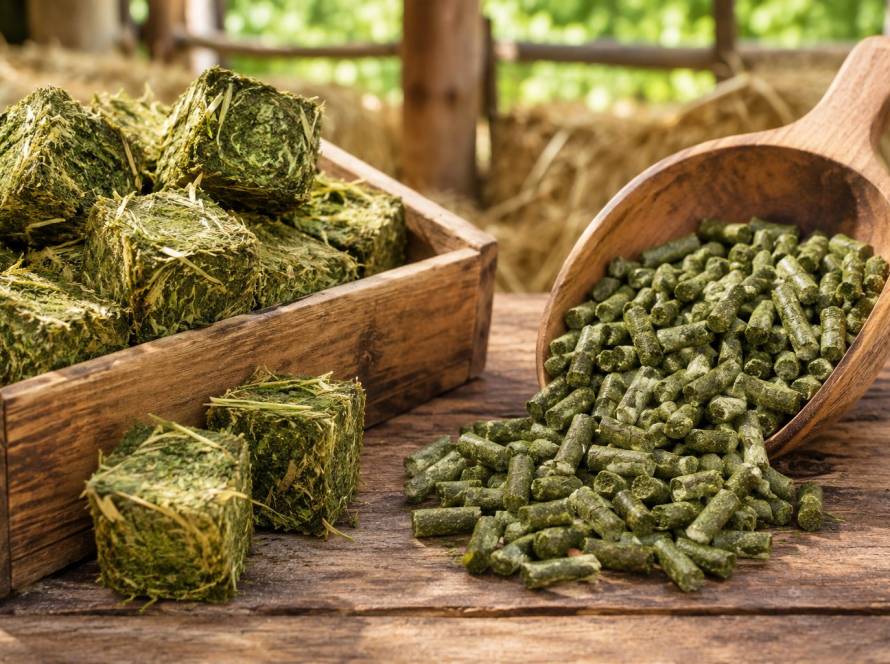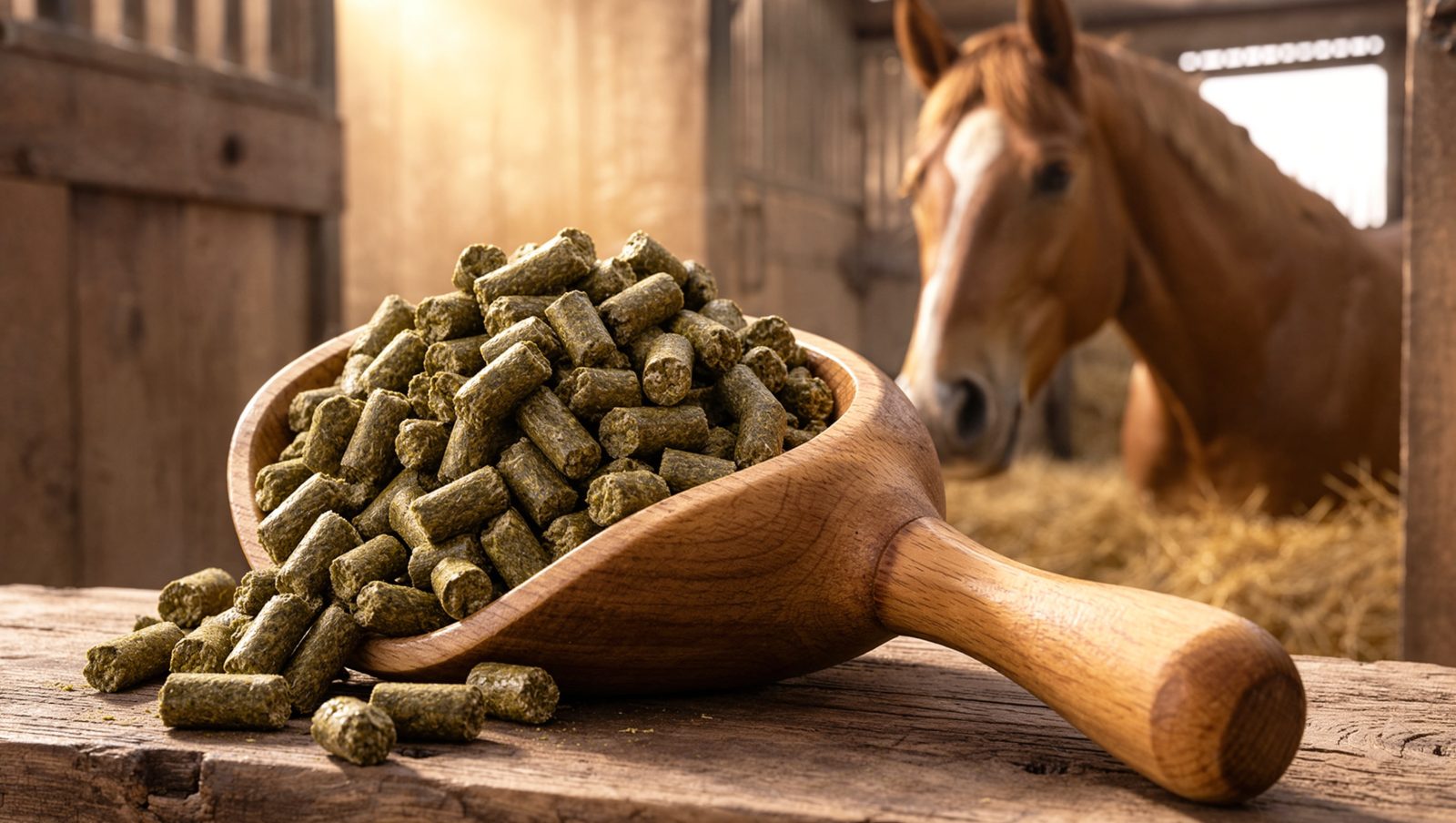
Timothy hay pellets show up on a lot of equestrian feed specification sheets, but most of what gets written about them focuses on pellets in general, not on what changes when the forage behind the pellet is Timothy grass and the animal eating it is a horse. Western Forage’s own product page describes Timothy pellets in four short sentences and then tells buyers to evaluate fiber content, moisture, pellet dimensions and nutritional specifications directly. This guide fills in the feeding side of that evaluation: how Timothy pellets fit into a horse’s diet, what fiber content and chewing time actually mean for a horse eating pellets instead of hay, when soaking matters, and what to specify on a commercial order.
What Timothy hay pellets are
Western Forage’s own Timothy and Alfalfa Hay Pellets page describes Timothy Hay Pellets as produced from Timothy grass that is processed and compressed into pellet form. As a grass based forage product, Timothy pellets are commonly considered for equestrian, livestock and specialty animal feed applications. The page recommends buyers evaluate pellets according to fiber content, moisture, pellet dimensions and nutritional specifications, and offers to review current availability and packaging options for international orders. None of that tells a buyer how a horse actually eats pellets differently from hay, which is where extension research is the better source.
How Timothy pellets fit into a horse’s diet
A University of Georgia Cooperative Extension guide to forage alternatives for horses describes hay pellets broadly, including Timothy, as made by grinding, heating and pelleting long stem hay under pressure. For forage alternatives in general, including pellets, the guide states they are typically used in a 1 to 1 ratio by weight, meaning one pound of an alternative replaces one pound of hay, and stresses that feed should be weighed rather than measured by volume since density varies greatly between products. The same guide recommends making any change to a horse’s feeding program gradually, over 10 to 14 days, and notes that horses should still be provided a small amount of long stem forage each day where dentition allows, to support chew time and gastrointestinal health. It also flags that feeding an unfortified, forage only pellet without additional supplementation may not meet a horse’s full nutrient requirements, which is a useful question to settle with a supplier before ordering plain versus fortified product.
Fiber content and chewing time
The same University of Georgia Cooperative Extension guide reports Timothy Hay Pellets at 30 to 38 percent crude fiber on a dry matter basis, compared with 25 to 30 percent for alfalfa cubes in the same table. It also notes that pellets, due to their fine grind, require less chewing and are more digestible than some other forage alternatives, which is why the guide recommends feeding pellets in multiple small meals to mimic natural feeding behavior rather than one or two large ones. For buyers comparing formats, our Alfalfa Hay Cubes vs Alfalfa Pellets guide covers the general size and density difference between cubes and pellets. The extension guide adds the horse specific detail: cubes and blocks require more chewing time than pellets but less than long stem hay, so where chew time and reduced boredom matter for a particular horse, that is a real difference between formats, not just a packaging preference.
Soaking: when it matters and when it does not
The University of Georgia guide is specific here, and it is worth reading closely rather than applying a blanket soaking rule. It states that soaking forage alternatives should be used as a management tool to improve feed safety, ease of intake and suitability for horses with special needs, rather than as a way to add hydration, since a cited 2025 study found horses actually drink less water after eating soaked feed. For pellets specifically, the guide states that pelleted forages may not need to be soaked for horses with normal dentition, a slow rate of consumption and no history of choke. When soaking is used, whether for an individual horse’s needs or a vet’s recommendation, the guide advises mixing to a mash or soup like consistency, ensuring pellets are completely softened before feeding, to reduce choke risk. Any horse with dental issues, a history of choke, or a tendency to bolt feed should be managed on a vet’s advice regardless of which format is being fed.
Specifying Timothy pellets for a horse feed program
| Specify this | Why it matters |
|---|---|
| Crude fiber content | Extension data lists Timothy Hay Pellets at 30 to 38 percent on a dry matter basis, but request the figure for your specific lot |
| Plain or fortified | An unfortified, forage only pellet may not meet a horse’s full nutrient requirements without additional supplementation |
| Moisture content | Affects storage life and spoilage risk during transit |
| Pellet diameter | Confirms the physical size matches your handling and feeding equipment |
| Packaging and crop year | Needed for import documentation and storage planning |
| Certificate of analysis for the specific lot | Confirms the figures above for the pellets you are actually receiving, not an industry average |
Request Timothy hay pellet specifications →
Frequently asked
Can Timothy hay pellets fully replace hay in a horse’s diet?
Extension guidance describes forage alternatives, including pellets, as usable to replace part or all of the forage portion of a horse’s diet at roughly a 1 to 1 ratio by weight, but also recommends still providing a small amount of long stem forage daily where a horse’s dentition allows, to support chew time and gastrointestinal health.
Do Timothy hay pellets need to be soaked before feeding?
Not necessarily. University of Georgia Cooperative Extension guidance states that pelleted forages may not need soaking for horses with normal dentition, a slow eating rate and no history of choke. Soak on a vet’s advice for horses with dental issues, a choke history, or special needs.
How much fiber do Timothy hay pellets contain?
University of Georgia Cooperative Extension data lists Timothy Hay Pellets at 30 to 38 percent crude fiber on a dry matter basis. Request a certificate of analysis for the specific lot you are ordering to confirm the figure for that batch.
How quickly can I switch a horse onto Timothy pellets?
Extension guidance recommends making any change to a horse’s feeding program gradually, over 10 to 14 days, rather than switching all at once.
Are all Timothy hay pellets fortified with added nutrients?
Not necessarily. Pellets may be plain, forage only, or fortified. Feeding an unfortified pellet without additional supplementation may not meet a horse’s full nutrient requirements, so confirm which type you are ordering and consult a qualified equine nutritionist if you are unsure.
Request Timothy hay pellet specifications
Tell us the fortification, volume and destination you need, and our export team will confirm what is currently available.